
Passive House
These are a series of posts about our journey to design and build a passive house in Stawell, near the beautiful Grampians National Park.
-
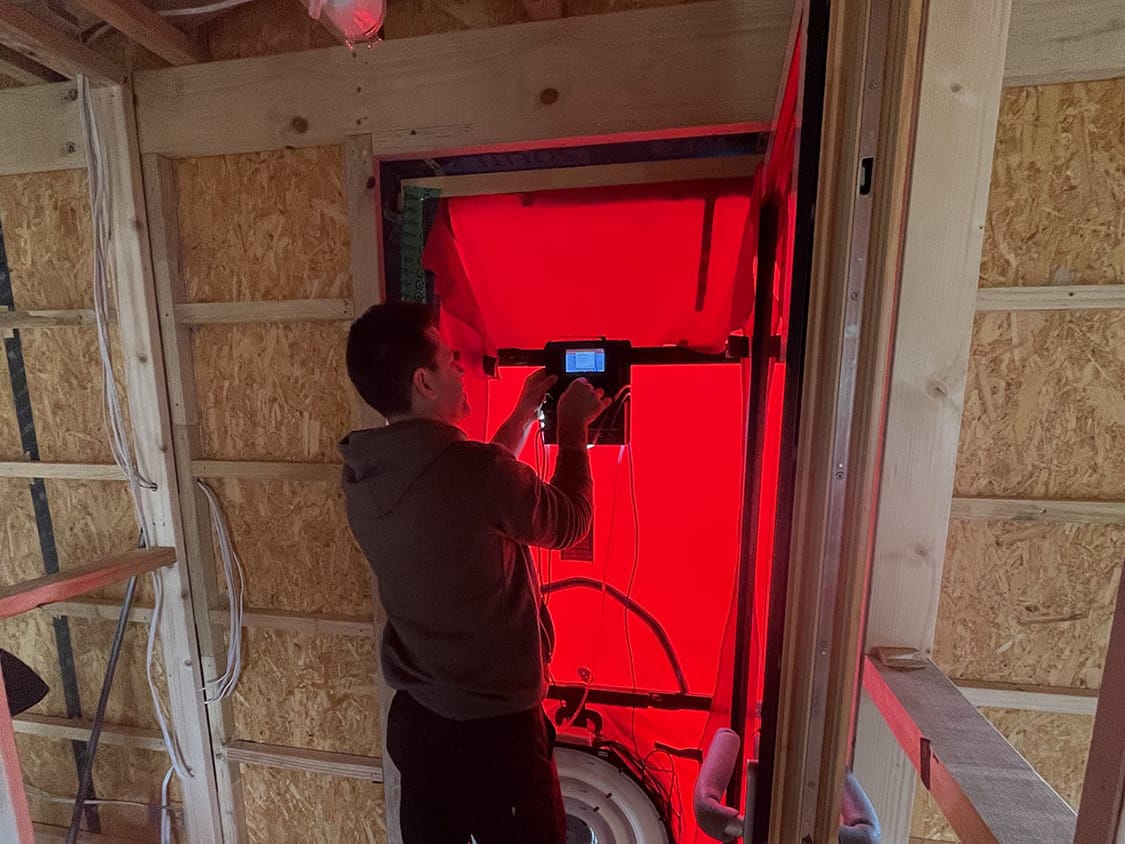
SIPs building are naturally more airtight than a traditional timber framed house. Proclima product for internal walls, called Intello Plus, however, because of the airtightness of the OSB, all we had to do was use the Tescon Extora tape over each join. Blower Door Test Once you’re confident that you’ve sealed up all the gaps…
-
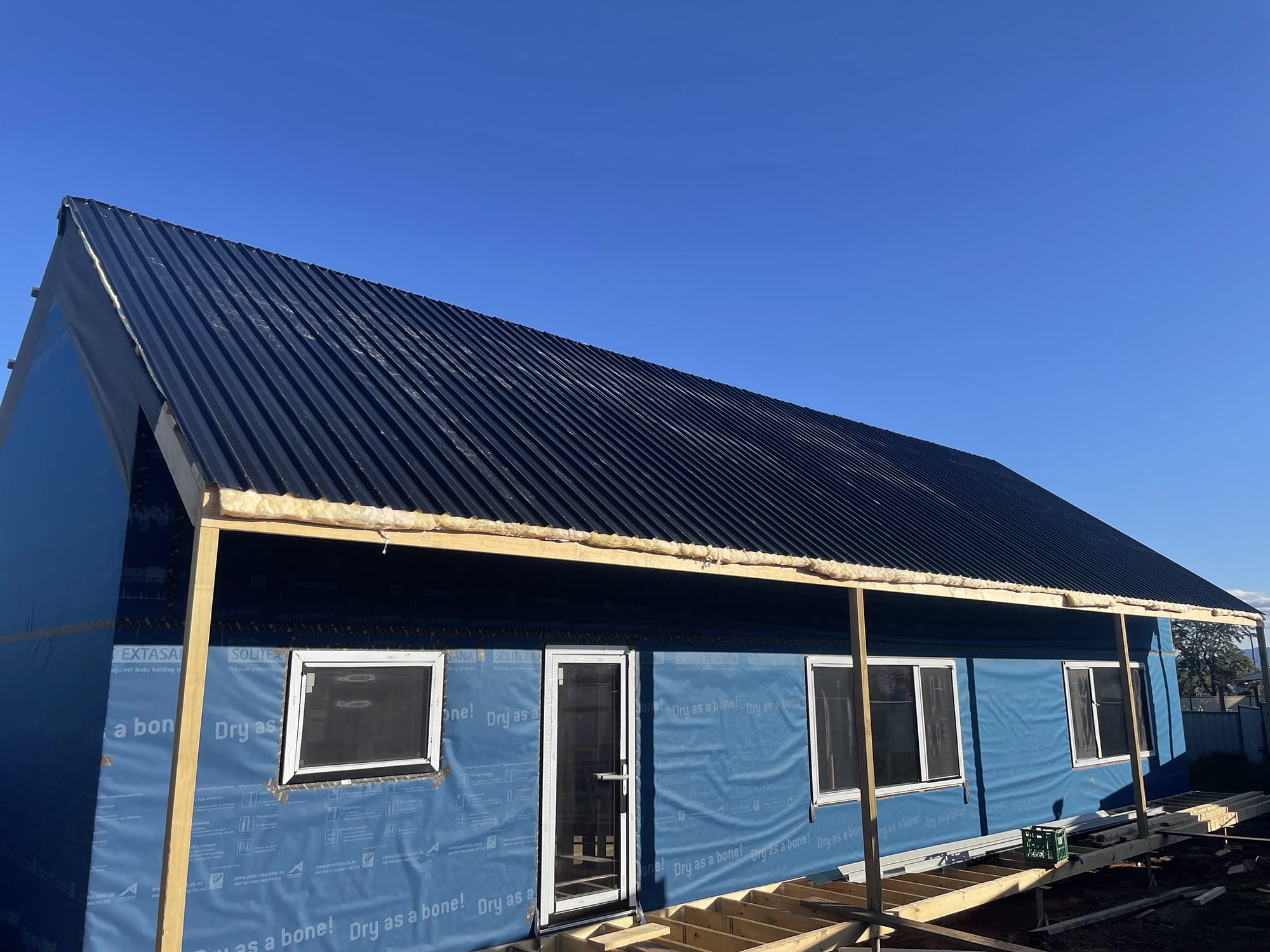
Reaching lockup is such a relief, the frustration for us was that the bank couldn’t understand how we were at lockup without any cladding on the building. Weather-tight wrap Who would’ve thought that building sarking could evolve and become one of a buildings most important attribute, not ony shielding from moisture, but preventing drafts. After…
-
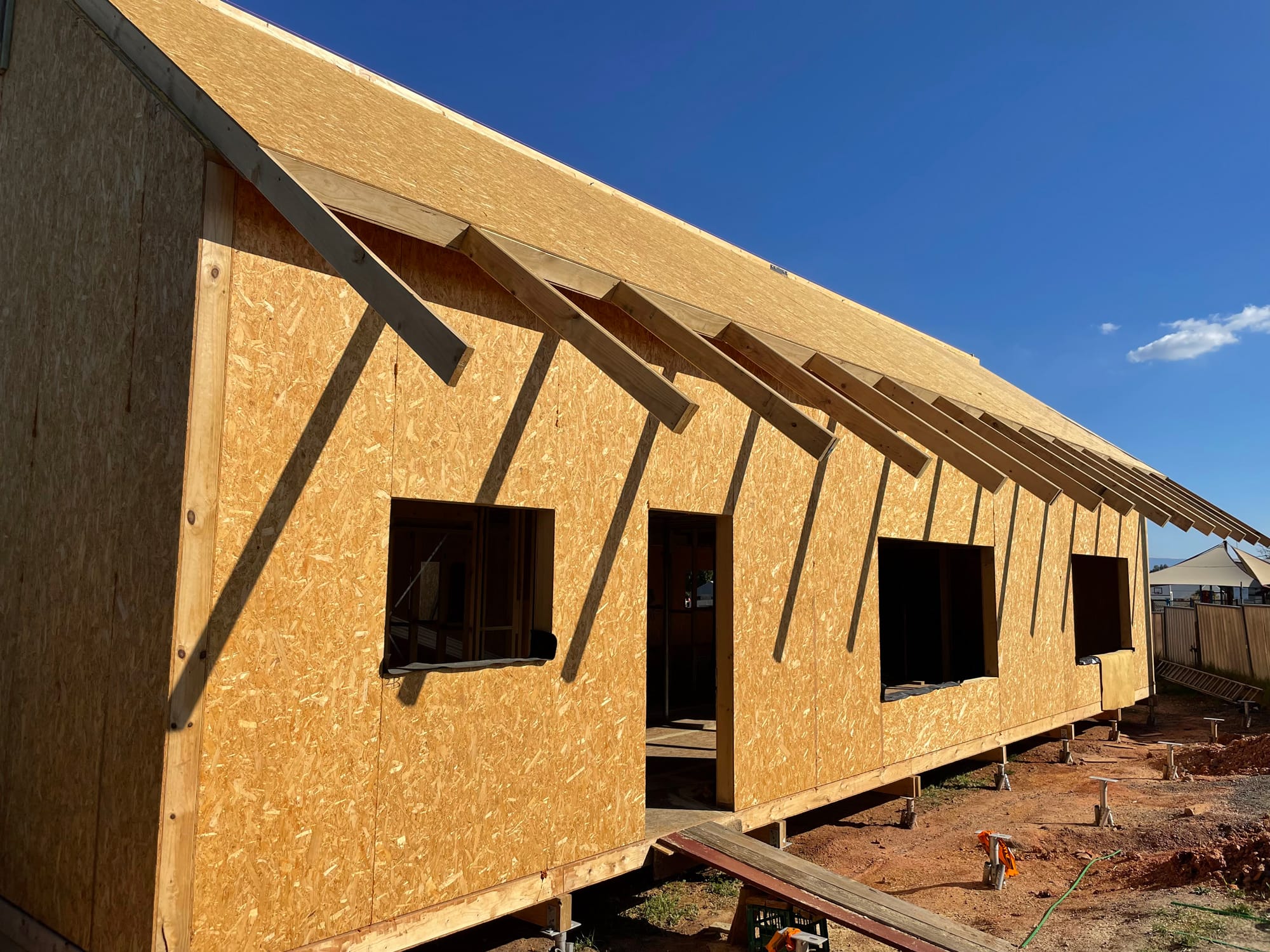
SIPs is an acronym for Structural Insulated Panels, a concept used heavily in Europe, and growing quickly across the globe. The are made of a polystyrene core, laminated between two panels of Oriented Strand Board (OSB). Our panels were manufactured by SIPs Industries in Western Australia. Floor Panels The floor panels have a thickness of…
-
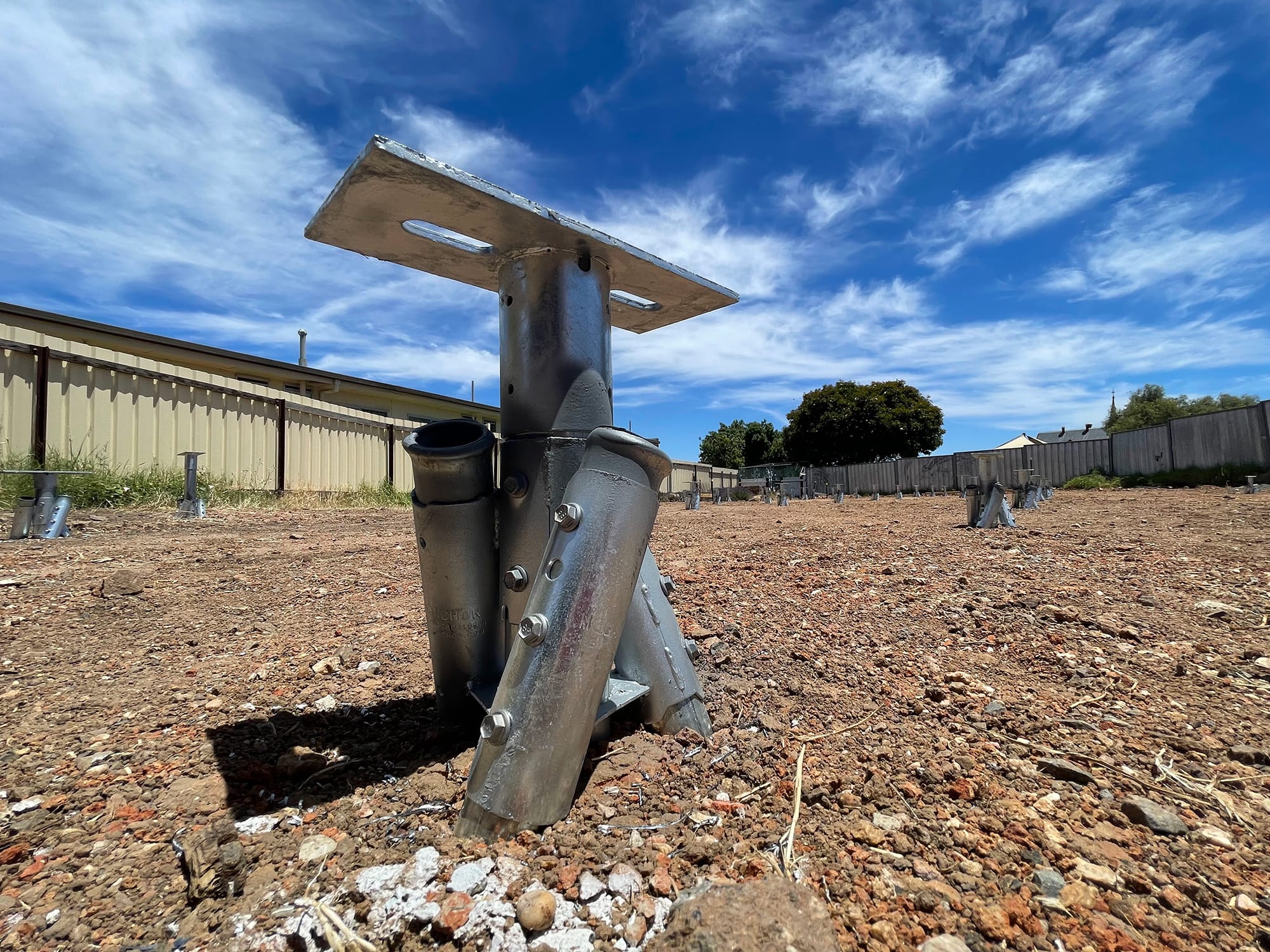
Prior to Christmas 2022, we broke ground. Rather than installing a traditional concrete slab, we opted for an alternative with a much lower carbon footprint and a lighter impact on the site. To avoid concrete entirely, we chose a footing system manufactured by Mega Anchor. These steel foundations utilise three rods per footing, which are…
-
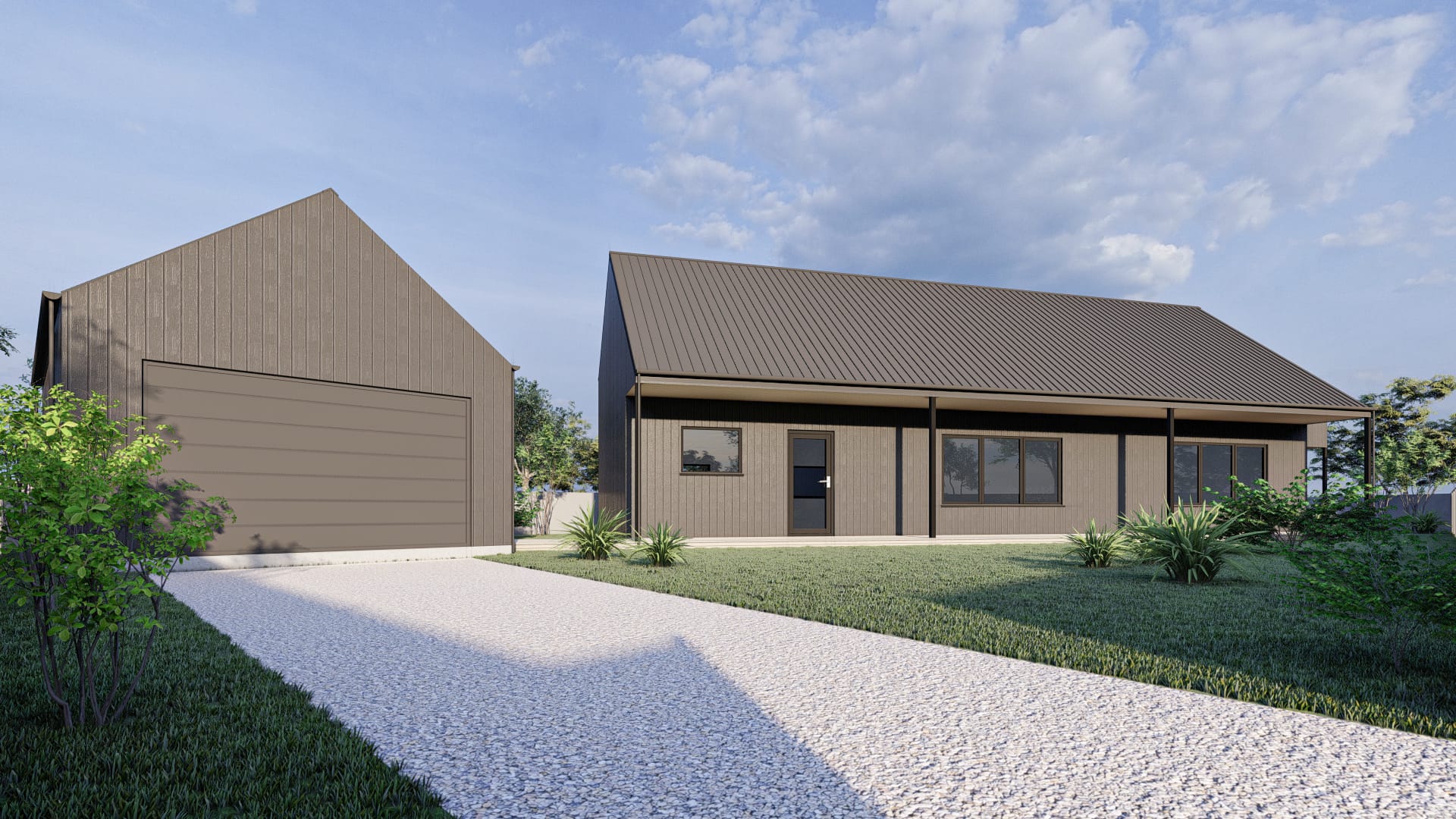
I recall reading an article about cookie-cutter houses, produced en masse by volume builders, calling them “Glorified tents”. My inlaws live in a volume built house in the western suburbs of Melbourne. It’s a massive house, poorly constructed, terribly insulated, freezing in winter and hot in summer. We already lived in a tent, this immediately…
-
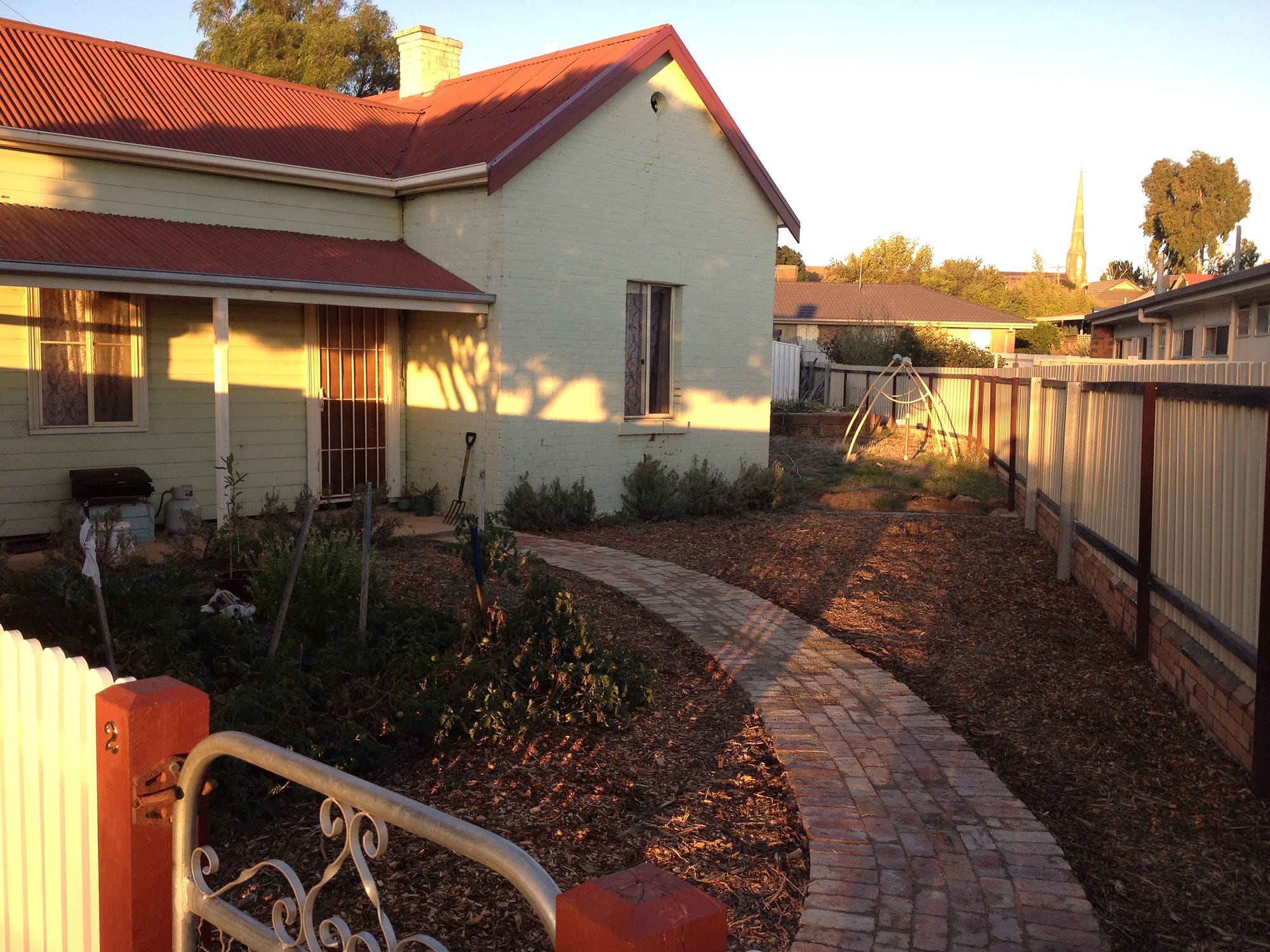
We had always imagined it was the headmaster’s cottage, the bricks were firm, but brittle, probably made with the clay onsite. It was most likely constructed in the 1870’s, a similar age to the adjacent primary school. It would’ve stood proud, the only house on the block 150 years ago. Several additions to the house…